

Why Do Some Hair Products Weigh Hair Down and How to Choose the Right Hair Care
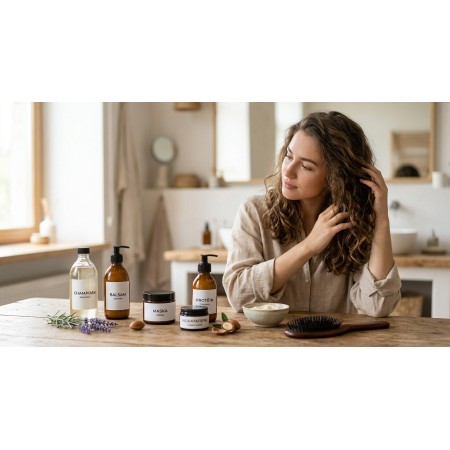
We choose shampoos, conditioners, and hair masks in the hope that our hair will become softer, smoother, and shinier. Sometimes, however, the results are quite different from what we expected. Instead of gaining volume and vitality, our hair looks flat, loses its shape, becomes greasy more quickly, or feels unpleasantly stiff to the touch.
This can happen with protein-based products as well as moisturizing and nourishing formulas. The cause is not always the ingredient itself, but rather the combination of ingredients, the amount of product used, the frequency of application, and the individual characteristics of the hair.
That is why proper hair care is not determined solely by whether your hair is dry, coloured, or untreated. It is important to understand what your hair needs and how to choose products that will improve its condition without weighing it down.
1. Why Do Certain Hair Products Weigh Hair Down?
Hair that feels weighed down is a common problem, especially for fine hair that tends to lose volume easily. This can manifest in several ways: the hair lies flat against the scalp, looks greasy shortly after washing, individual strands clump together, or the hairstyle loses its shape.
One possible cause is the use of formulas that are too rich. Some hair masks, conditioners, and leave-in products contain combinations of oils, emollients, silicones, and conditioning agents that smooth the hair shaft and make detangling easier. For dry, thick hair, this can be a desirable effect. For fine hair, however, the same product may leave a heavy feeling and reduce volume.
Another possible cause is the build-up of styling products and hair care residues. When we use several products at once without considering the quantity or our hair's needs, the hair may gradually lose its lightness and natural movement.
If your hair looks dry, loses its shine, and tangles more easily, it is important to first understand what it needs. In our article “Can We Restore Dehydrated Hair Without Cutting It?”, you will find more information about the signs of hair dehydration and the care that can help improve your hair’s softness and appearance.
It is also important to make one distinction: hair that feels weighed down is not necessarily damaged. Sometimes, simply switching to a lighter formula, reducing the amount used, or improving the washing routine is enough to restore the desired look.
2. Hair Proteins: When Are They Beneficial, and When Can They Cause Problems?
Hair is composed primarily of keratin, a structural protein that contributes to its strength. Hair care products use various protein derivatives, including hydrolysed keratin and wheat, rice, and silk proteins.
These ingredients can form a film on the hair's surface, improve the feel of thickness and smoothness, and temporarily help support its mechanical properties. Their effects depend on the specific ingredient, its concentration, and the overall formula.
Protein-based products can be particularly useful for hair weakened by colouring, bleaching, frequent heat styling, or mechanical friction. However, this does not mean that every hair type needs intensive protein treatments.
For some people, certain protein-containing products can leave the hair feeling stiffer, less flexible, or more difficult to style. If the formula is rich in film-forming and conditioning ingredients, it may also reduce volume in fine hair.
The term "protein overload" is commonly used to describe hair that feels dry, rough, or stiff after using certain products. However, these symptoms alone do not prove that proteins are the cause. Product build-up, insufficient conditioning, excessive heat styling, or pre-existing damage may also be responsible.
There is no need to avoid all protein ingredients. A more sensible approach is to observe how your hair responds and choose formulas according to its actual needs.
3. Can Moisturizing Products Weigh Hair Down?
Yes. Moisturizing products can also weigh hair down, particularly when their formulas are too rich for a specific hair type.
It is important to understand that the label "moisturizing" does not automatically mean "lightweight". A product may contain humectants while also including oils, waxes, silicones, and other ingredients that soften and smooth the hair shaft.
Ingredients such as glycerin and panthenol can help attract and retain moisture. Emollients, in turn, help soften the hair and smooth its surface. Silicones and certain conditioning agents can reduce friction and make detangling easier.
These ingredients are not inherently harmful. On the contrary, they can be very beneficial for dry, porous, and weakened hair. Problems may arise when the overall formula is too heavy for the hair's characteristics or when the product is used in excessive amounts.
For example, fine, straight hair may lose volume after the application of a rich hair mask, while thick, curly, and dry hair may become softer, easier to detangle, and less prone to tangling when using the same type of product.
That is why it is important not to choose hair care products based solely on their promise of hydration. We should also consider their texture, intended purpose, and the manufacturer's recommendations.
4. What Is the Difference Between Caring for Coloured and Untreated Hair?
Coloured and untreated hair can have similar needs, but chemical processing often changes the condition of the hair shaft.
Permanent colouring, particularly bleaching, can cause changes to the hair's structure and surface. As a result, hair may become more porous, rougher, and more prone to breakage. This explains why coloured hair often requires more targeted conditioning and restorative care.
Moisturizing products are generally suitable for coloured hair. They can improve softness, reduce friction between strands, and make detangling easier. Some conditioning formulas may also help maintain the hair's appearance after colouring.
This does not mean that every product labelled as moisturizing is suitable for all coloured hair types. If the hair is fine and easily flattened, a rich mask may be too heavy. If it is heavily bleached, dry, and porous, a richer formula may be more appropriate.
The same applies to untreated hair. Natural hair can also be dry, porous, curly, or damaged by heat and mechanical stress. Not every untreated hair type needs protein-based products, just as not every coloured hair type needs the most intensive mask available.
The main consideration should be the condition of the hair shaft, not simply whether the hair has been coloured.
5. How to Choose the Right Product for Your Hair Type
To avoid weighing hair down, we need to consider the thickness of individual strands, overall hair density, degree of dryness, and whether the hair has undergone chemical processing.
Fine Hair That Easily Loses Volume
For this hair type, it is best to start with lightweight shampoos, conditioners, and leave-in products. Richer masks can be used when needed, but in moderate amounts and according to the manufacturer's instructions.
A conditioner is usually sufficient to improve detangling for healthy, fine hair. There is no need to use an intensive hair mask every time you wash your hair.
Dry and Thick Hair
Thick, dry hair often responds well to richer conditioners, masks, and products that soften the hair and reduce friction. For curly and wavy hair, suitable conditioning care can help improve definition and reduce the feeling of dryness.
However, the amount used still matters. Even dry hair can lose its natural lightness if too many products are applied at once.
Coloured or Bleached Hair
For coloured hair, it is sensible to choose products designed for chemically treated hair and suited to its current condition. If the hair is dry and porous, conditioners and masks with good conditioning properties may be beneficial, along with appropriate restorative care.
When maintaining colour, it is also important to consider your shampoo. Overly harsh or unnecessarily frequent washing can accelerate colour fading. Choosing products for coloured hair should therefore involve balancing effective cleansing with suitable care for the lengths.
Hair That Feels Stiff, Rough, or Difficult to Detangle
In this situation, we should not immediately assume that the cause is a lack of moisture or too much protein. Product build-up, heat damage, chemical processing, or insufficient conditioning may be responsible.
A good first step is to simplify the routine and use a suitable shampoo and conditioner before adding more active products.
6. How Can You Tell Whether a Product Is Right for Your Hair?
The most useful guide is how your hair looks and feels after washing and styling, rather than the description on the packaging alone.
Pay attention to a few signs:
-
Your hair feels soft and is easy to detangle. This generally indicates that the product provides suitable conditioning.
-
Your hair looks flat and the strands clump together. The formula may be too rich, or product build-up may be occurring.
-
Your hair feels rough and tangles easily. This may be related to damage, friction, unsuitable cleansing, or insufficient conditioning.
-
Your hair feels stiff and is difficult to style. Review the products you use, especially if you have introduced several new formulas at the same time.
-
Your hair looks good immediately after washing but quickly loses volume. Try using less conditioner or hair mask, and avoid applying rich products close to the roots unless the manufacturer recommends otherwise.
Do not draw conclusions based on a single sign. For example, stiffness does not necessarily mean excessive protein use, and loss of volume does not prove that the hair is over-moisturized.
Change one element of your routine at a time so that you can more easily identify what is actually affecting the results.
7. How to Combine Moisturizing and Protein-Based Products
You do not have to choose just one type of hair care. Moisturizing and protein-based products can serve different, complementary purposes when selected appropriately.
For example, bleached hair that breaks easily may benefit from conditioning, suitable restorative care, and heat protection. A protein-based product can be a useful part of the routine, but it does not necessarily need to be used with every wash.
For fine, untreated hair that is already soft and healthy, a lightweight conditioner may be entirely sufficient. If the hair starts to feel stiff after using a particular mask, you can reduce its frequency of use or temporarily replace it with a lighter formula.
There is no universal schedule requiring every hair type to receive protein once a week or a moisturizing mask with every wash. The frequency depends on the condition of the hair shaft, the product formula, and how the hair responds.
The best approach is to build a routine that provides the necessary cleansing and conditioning without accumulating unnecessary products.
8. The Most Common Mistakes When Choosing Hair Care Products
One of the most common mistakes is choosing hair care products solely because they are labelled "moisturizing", "restorative", or "protein-enriched". These descriptions provide an indication of the product's intended purpose, but they do not guarantee that it will be suitable for every hair type.
Another mistake is using too many products at the same time. Shampoo, conditioner, hair mask, serum, oil, and several leave-in products can make a routine unnecessarily complicated without necessarily improving the results.
We should also avoid assuming that natural hair does not need conditioning or that coloured hair must always use the richest formulas. Hair needs can change over time due to seasonal changes, heat styling, colouring, or changes in hair length.
Finally, remember that products intended for the lengths do not necessarily need to be applied to the scalp. Many conditioners and masks are designed primarily for the mid-lengths and ends. Follow the manufacturer's instructions to avoid unnecessary weight at the roots.
The Right Hair Care Routine Is All About Balance
Beautiful hair does not depend on using as many products as possible, but on choosing the right ones. Protein-based formulas can support the care of damaged hair, while moisturizing and conditioning products can improve softness, smoothness, and ease of detangling.
However, both types of products can prove unsuitable if the formula is too rich for a particular hair type or is used in the wrong amount.
For fine hair, maintaining lightness and volume is usually important. Dry, thick, or chemically treated hair may require more intensive conditioning. Coloured hair needs a balance between maintaining the condition of the lengths and using suitable cleansing and colour-care products.
The most important thing is to observe how your hair responds, look beyond marketing claims, and adjust your routine according to its actual needs. When products are chosen carefully, hair can be soft, smooth, easy to style, and full of natural volume at the same time.
Leave a Comment