



Can We Restore Dehydrated Hair Without Cutting It
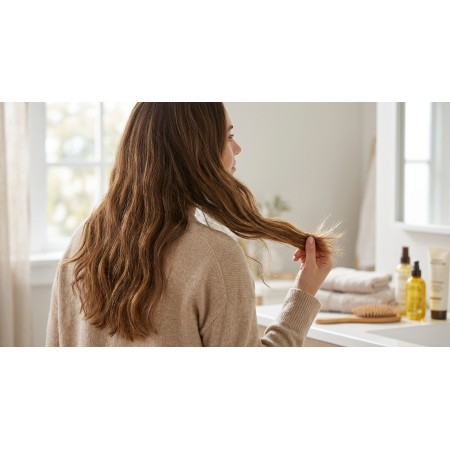
Hair has become dry, lost its shine, tangles more easily, and the ends look worn out. The first thought is often that it is time for a haircut. But do we really have to give up some length to bring our hair back to a healthy-looking condition?
Not necessarily.
Dehydrated hair can often improve in condition and appearance with the right care. The key is to understand what it needs, change some of our habits, and give it time. A haircut is sometimes necessary, especially when the ends are severely damaged and split, but it does not have to be the first step.
In this article, we will look at how to recognise dehydrated hair, what we can do to improve its condition, and when it is genuinely necessary to cut off some of the length.
How Can We Tell If Our Hair Is Dehydrated?
Dehydrated hair usually looks drier, less elastic, and more difficult to style. It may lose its natural shine, become static, and tangle more than usual.
Some of the most common signs include:
-
Lack of shine. The hair looks dull and lifeless, even when it is clean.
-
Rough texture. The strands do not feel as smooth and soft to the touch.
-
More tangling. This is particularly noticeable along the lengths and at the ends, where the hair is exposed to more damage.
-
Frizz and static. The hair struggles to maintain a smooth appearance, especially when humidity levels change.
-
Difficulty styling. The hairstyle loses its shape more easily, and the hair may look uneven along its length.
It is important to distinguish between dehydrated and severely damaged hair. The two conditions can occur at the same time, but they are not the same.
With dehydrated hair, suitable products can improve softness, smoothness, and manageability. However, when the hair shaft has been severely damaged by bleaching, colouring, high temperatures, or mechanical stress, the problem may go beyond a simple lack of moisture.
That is why we should not assume that every dry end means we need to cut our hair immediately.
Can Dehydrated Hair Be Fully Restored?
It is important to clarify what restoration means in this context.
The hair shaft that has already grown out is made primarily of dead cells and cannot biologically repair itself in the same way that skin does. However, we can significantly improve its condition and appearance.
The right care helps hair become softer, smoother, and easier to detangle. Conditioners, masks, and leave-in products can reduce friction between strands, improve the feel of hydration, and limit breakage during brushing.
This means we do not have to give up our length simply because our hair has lost its shine or started to feel rough.
However, if the ends are split, severely thinned out, or break at the slightest touch, cosmetic products cannot permanently restore their structure. In such cases, a small trim can improve the overall appearance and help prevent splits from travelling further up the hair shaft.
The best approach is to improve our hair care first and then assess how much length genuinely needs to be removed.
Why Should We Avoid Rushing Into a Haircut?
When hair looks worn out, cutting off a few centimetres often seems like the easiest solution. However, taking such a drastic step straight away is not always necessary.
Sometimes hair loses its smoothness because of frequent straightener use, unsuitable products, sun exposure, dry air, or overly harsh washing. In these cases, changing our hair care routine can significantly improve its appearance.
Before giving up some length, we can try a few things:
-
Use a suitable conditioner after every wash.
-
Include a moisturising hair mask according to our hair's needs.
-
Reduce the use of straighteners, curling irons, and hot hair dryers.
-
Detangle gently without pulling at knots.
-
Protect the lengths from friction and additional mechanical damage.
After a few weeks of consistent care, it will be easier to assess whether the hair has become softer and easier to style, and which areas still need trimming.
This does not mean ignoring split ends. The idea is to avoid cutting off a significant amount of hair simply because it currently looks dry.
How Should We Care for Dehydrated Hair?
1. Choose a Shampoo According to Your Scalp's Needs
When our hair is dry, we often start replacing every product we use. However, it is best to begin with the basics — shampoo.
It should cleanse the scalp effectively without leaving the lengths excessively dry. If our hair is dehydrated, harsh washing and using strong cleansing products too frequently can make it feel even drier.
Apply shampoo mainly to the scalp and massage gently with your fingertips. As you rinse, the lather will pass through the lengths, so there is no need to rub them separately.
2. Do Not Skip Conditioner
Conditioner is one of the most important steps in caring for dry hair. It smooths the hair surface, makes detangling easier, and reduces friction between individual strands.
Look for a product that leaves the hair softer and easier to style without weighing it down. Apply it mainly to the lengths and ends, following the manufacturer's instructions.
With regular use, conditioner can help reduce breakage, which is especially important when we are trying to preserve our hair length.
3. Add a Hair Mask According to Your Hair's Condition
A hair mask can provide more intensive care than a regular conditioner, but the right choice depends on the condition of the hair shaft.
For hair that feels dry and rough and is difficult to detangle, we can choose a mask with moisturising and softening ingredients. For hair damaged by bleaching or frequent colouring, a product designed for chemically treated hair may be more suitable.
There is no need to use several masks and oils at the same time. It is better to start with one suitable formula and observe how our hair responds.
More products do not necessarily mean better results.
4. Use Leave-In Products
Leave-in creams, serums, and conditioners can be helpful when the hair continues to look dry between washes.
They make detangling easier, reduce friction, and help the hair look smoother. Some formulas also provide heat protection, but it is important to check whether the specific product is intended for this purpose.
Apply a small amount to the lengths and ends, avoiding excessive product build-up. The goal is to make the hair softer and more manageable, not heavy and greasy.
5. Limit Heat Styling
Straighteners and curling irons can make hair look smooth and shiny temporarily, but frequent exposure to high temperatures can damage the cuticle and increase breakage.
If our hair is already dry, it is a good idea to reduce heat styling for a while. When using a hair dryer, choose a moderate temperature and avoid directing hot air at the same section for too long.
When a straightener or curling iron is necessary, use a heat protectant and avoid repeatedly passing the tool over the same section.
This change is especially important if we want to preserve our length, because breakage can prevent the hair from looking longer over time.
6. Detangle Gently
Dehydrated hair often tangles more easily and may be more prone to breakage when brushed roughly.
Start at the ends and gradually work your way up. Use a suitable brush or comb, and do not pull hard when you encounter a knot.
If the hair is very tangled, you can apply a little leave-in conditioner or detangling spray. This reduces friction and makes it easier to separate the strands.
It is also best to avoid rubbing the hair vigorously with a towel after washing. Instead, gently press out the excess water.
Moisture Is Not the Only Thing Hair Needs
When we talk about dehydrated hair, it is easy to assume that the solution is simply to use more moisturising products.
In reality, good hair care involves several different elements.
Moisturising ingredients help retain water and improve the feel of softness. Conditioning ingredients smooth the hair shaft and make detangling easier. Film-forming ingredients can reduce friction and help maintain a smoother appearance.
Protein ingredients can also be useful in some formulas, particularly for damaged hair, but not every hair type needs them with every wash.
That is why it is important to observe the results. If your hair feels soft and flexible after using a mask, the product is probably suitable for its current needs. If it starts to feel stiff, rough, or excessively weighed down, you may need to change the product or how often you use it.
How Long Does It Take to See Results?
With appropriate care, improvements in softness, smoothness, and detangling can become noticeable after the first few washes.
However, more lasting results depend on the cause of the dryness, the degree of damage, and our daily habits.
If the hair is simply dry and has lost its shine, changing products and styling methods can make a noticeable difference. If it has been heavily bleached, coloured repeatedly, or damaged by heat, the improvement may be more limited and require ongoing care.
It is best to assess its condition gradually rather than expect a mask or serum to solve everything after a single use.
One more important point: if the hair looks better after a few weeks, that does not mean the damage has disappeared completely. Continue with gentle care to maintain the results.
When Is It Time for a Haircut After All?
You do not need to cut your hair simply because it is dehydrated. However, there are situations in which removing some length is a sensible decision.
Look out for the following signs:
-
The ends are visibly split and separate into several sections.
-
The lengths are severely thinned out and look transparent compared with the rest of the hair.
-
The hair breaks easily and has many sections of different lengths.
-
The ends remain rough and uneven despite appropriate care.
In these situations, removing only the most damaged part may be enough, rather than making a drastic change to the hairstyle.
There is no universal number of centimetres that should be cut off. The decision depends on the actual condition of the hair and how much length we want to preserve.
If you are unsure, you can consult a hairstylist who can assess the ends and recommend the minimum amount that needs to be trimmed.
If the condition of your hair changes suddenly, there is significant breakage close to the roots, or you also experience increased hair loss, it is advisable to seek a medical assessment rather than relying solely on cosmetic care.
How Can We Preserve Length While Improving Hair Condition?
If our goal is to have long hair, simply waiting for it to grow is not enough. We also need to care for the lengths that have already grown to minimise breakage.
This means using suitable products, detangling gently, limiting excessive heat styling, and avoiding unnecessary mechanical stress.
It is also a good idea to avoid bleaching too frequently and undergoing other harsh treatments when the hair is already in poor condition.
Hair grows from the roots, but its visible length also depends on how well we preserve the ends. When hair breaks faster than it grows, we may feel as though it is not growing at all.
That is why caring for the lengths is so important. We cannot fully restore the original structure of severely damaged hair shafts, but we can improve their appearance and limit further damage.
Don't Rush to Cut Your Hair
Dehydrated hair does not always mean we need to give up our length. In many cases, the right care can restore some of its softness, smoothness, and shine without requiring a drastic change to the hairstyle.
Start with gentler washing, conditioner, a suitable mask, and reduced heat exposure. Give your hair time to respond and assess which sections are genuinely damaged.
If the ends are split, a small trim can help, but you do not need to cut off the healthy part of your hair simply because it does not currently look the way you would like.
Before reaching for the scissors, try changing your hair care routine. Sometimes hair does not need to be shorter — it needs more attention and the right products.
Leave a Comment